Quick answer
To scrap a car legally in England, use a licensed collector that takes it to an Authorised Treatment Facility, which issues a Certificate of Destruction and tells the DVLA. Rapid Recovery in Corby collects for free and pays by bank transfer. Call 07598 314366.
On this page
- Why doing it properly matters
- Step by step: scrapping a car in England
- What is a Certificate of Destruction?
- Telling the DVLA and the V5C logbook
- Can I scrap a car without a logbook?
- Will I get a tax refund?
- Do I need to SORN a car I'm scrapping?
- Why can't I be paid in cash?
- What affects how much my scrap car is worth?
- Common mistakes to avoid
- Before we collect: a short checklist
- What we collect
- Is it worth repairing instead?
Why doing it properly matters
When a car reaches the end of its life, it has to be scrapped at an Authorised Treatment Facility (ATF). ATFs are licensed sites that safely remove fluids, batteries and hazardous parts, and recycle the rest. Only an ATF can issue the Certificate of Destruction that officially ends the vehicle's life.
If you hand your car to someone who isn't licensed, you could still be the registered keeper. That means you could be liable for fines, tax or anything else linked to that registration. Doing it the right way takes very little effort.
Step by step: scrapping a car in England
- Choose a licensed collector or ATF. Anyone collecting scrap vehicles should hold a waste carrier licence and, as a scrap metal collector, a scrap metal licence from the local council. Rapid Recovery holds both.
- Get a price. Tell us the make, model, year and condition. We confirm a price before collection.
- Remove your belongings and any private number plate you want to keep (see below).
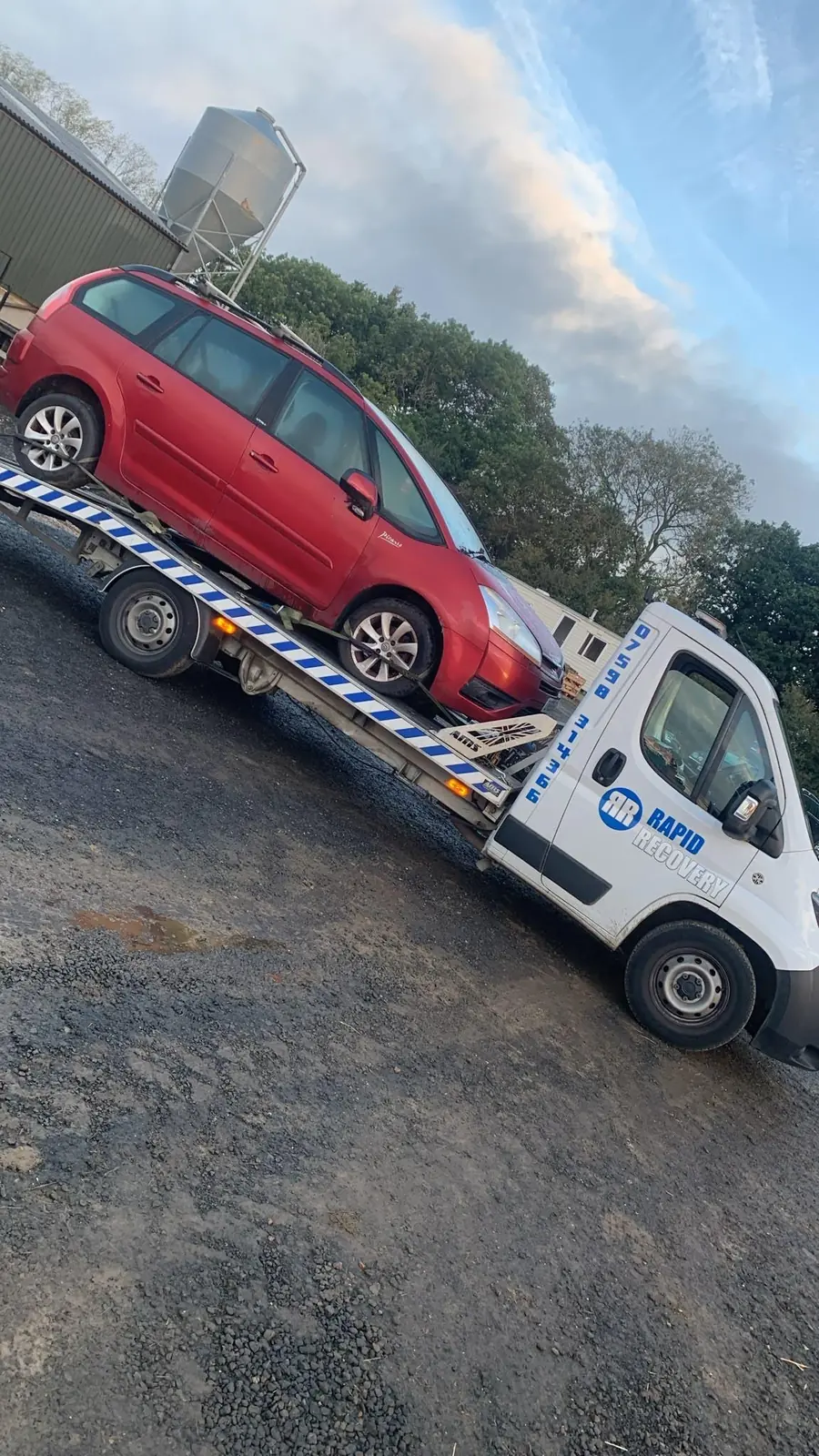
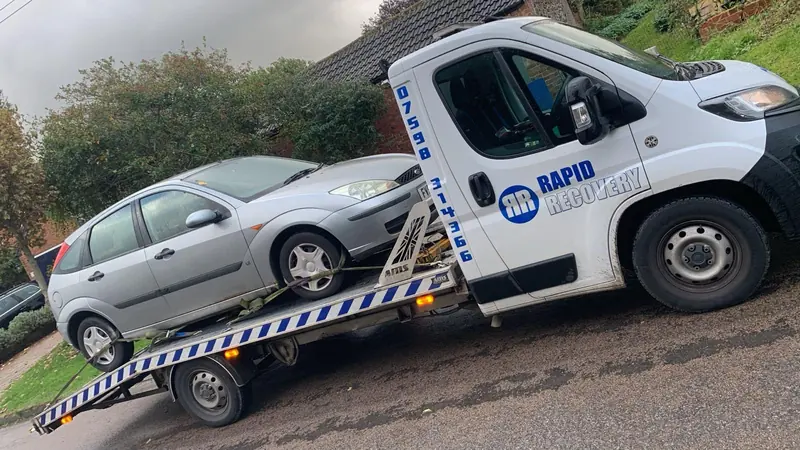
- We collect the car, free of charge, from your home, driveway or roadside, whether it runs or not.
- The car goes to an ATF. The ATF issues a Certificate of Destruction and notifies the DVLA.
- You are paid by bank transfer. Cash payments for scrap are illegal.
- The DVLA confirms the change, and any full months of tax are refunded automatically.
What is a Certificate of Destruction?
A Certificate of Destruction (CoD) is the official proof that your vehicle has been scrapped at an ATF. It shows you are no longer responsible for it. The ATF issues it and notifies the DVLA. Keep a copy of any paperwork for your records.
Telling the DVLA and the V5C logbook
When your car is scrapped, the DVLA needs to know. The ATF notifies the DVLA, but you also have a part to play with your V5C (the vehicle log book).
- Give the V5C to the ATF or the licensed collector taking the car there.
- Keep the yellow section of the V5C, the part used when a vehicle goes to the motor trade.
- Tell the DVLA that the car has gone to a scrapyard or ATF. You can do this online, or by post using that yellow section.
The DVLA then sends you a letter confirming you are no longer the keeper. If you don't receive it within a few weeks, contact the DVLA.
Can I scrap a car without a logbook?
Yes. A missing V5C doesn't stop you scrapping a car. We can collect a car with no V5C as long as you can show proof of ID and that you are entitled to dispose of it. You can still tell the DVLA that the car has been scrapped.
Will I get a tax refund?
Vehicle tax isn't transferable, and it is cancelled when the DVLA learns the car has been scrapped. The DVLA refunds any full calendar months of tax left automatically. You don't need to apply. Part months are not refunded. If you pay by Direct Debit, it is cancelled automatically too.
Do I need to SORN a car I'm scrapping?
Not after it has been scrapped. Once the DVLA has been told the car has gone to an ATF, it is off the road permanently and you aren't responsible for it. If the car is sitting off the road waiting for collection, it must either be taxed or declared SORN until it is scrapped. An untaxed car must not be parked on a public road.
Why can't I be paid in cash?
The Scrap Metal Dealers Act 2013 bans cash payments for scrap metal in England and Wales, including scrap cars. Payment must be by bank transfer or cheque so it can be traced. We always pay by bank transfer. Be wary of anyone offering cash for a scrap car: they are breaking the law, and it is a warning sign about how they will deal with your vehicle.
What affects how much my scrap car is worth?
- Weight. Most of a scrap car's value comes from its metal, so heavier vehicles are usually worth more.
- Scrap metal prices, which go up and down with the market.
- Make and model. Some vehicles have parts in demand.
- Completeness. A car missing its engine, catalytic converter or wheels is worth less.
- Condition. Accident damage or a non-running engine affects the value, but we still take them.
Our scrap car prices guide explains more.
Common mistakes to avoid
- Selling to an unlicensed buyer for a slightly higher price. If the car isn't taken to an ATF, you may never get a Certificate of Destruction and could stay liable as the keeper.
- Leaving the car on the street untaxed while you wait for collection. Keep it taxed, or SORN it and keep it off the road.
- Forgetting the private plate until after the car has gone.
- Not cancelling insurance, which means paying for a car you no longer own.
Before we collect: a short checklist
- Personal items. Check the glovebox, door pockets, under seats, the boot and the spare wheel well. Don't forget car park passes, toll tags, sunglasses and child seats.
- Private number plates. If your car has a private plate you want to keep, you must transfer it or put it on retention with the DVLA before the car is scrapped. Once the car has been destroyed, the registration may be lost.
- Insurance. Cancel your insurance once the car is collected. You may be due a refund.
- Finance. If the car is on finance, you can't scrap it until the finance is settled, because it isn't legally yours.
- Keys and V5C. Have them ready if you have them.
What we collect
We buy scrap and unwanted cars, vans and motorbikes around Corby, Kettering and nearby. We take non-runners, cars with no MOT, accident-damaged vehicles and cars with no V5C (with proof of ID). Collection is free. Our recovery trucks, beavertails and dollies mean we can collect from driveways, car parks and tight spots.
Is it worth repairing instead?
If you are not sure, a garage can give you a repair estimate. We can recover the car to a garage first, or transport it for a second opinion. If the repair costs more than the car is worth, scrapping is often the sensible choice. If the car simply won't start, it may only need a battery.
To arrange scrap car collection, call 07598 314366 or contact us.
Last updated 14 October 2026 by Rapid Recovery Corby.
Helpful guides
Questions people ask
How do I scrap my car legally in England?
Use a licensed collector or Authorised Treatment Facility. The ATF issues a Certificate of Destruction and tells the DVLA, and you should follow the instructions on your V5C or tell the DVLA online.
Can I get cash for my scrap car?
No. The Scrap Metal Dealers Act 2013 bans cash payments for scrap. Payment must be by bank transfer or cheque. Rapid Recovery always pays by bank transfer.
Can I scrap a car without the V5C logbook?
Yes. We can collect a car without a V5C as long as you can provide proof of ID and show you are entitled to dispose of it.
Will I get my car tax back when I scrap my car?
Yes, for any full months left. The DVLA refunds them automatically once it knows the car has been scrapped. Part months are not refunded.
Do I need to SORN my car after scrapping it?
No. Once the DVLA knows the car has been scrapped, you don't need a SORN. Before it is scrapped, an off-road car must be taxed or declared SORN.
How do I keep my private number plate when scrapping my car?
Transfer it to another vehicle or put it on retention with the DVLA before the car is scrapped. After the car is destroyed, the registration may be lost.
Do you collect scrap cars that don't run?
Yes. We collect non-runners, cars with no MOT and accident-damaged vehicles, with free collection around Corby and Kettering.
Can I scrap a car that is still on finance?
No. A car on finance belongs to the finance company until it is paid off, so the finance must be settled before the car can be scrapped.